Ötztal Canyoning for Beginners: Is It Really Beginner-Friendly?
Can complete beginners try canyoning in the Ötztal?
Yes. Local outfitters run guided beginner canyoning routes in gorges such as the Auerklamm and Alpenrosenklamm from June to September, with wetsuits, harnesses and helmets provided and no prior experience required. A reasonable comfort with water and a basic level of fitness are enough.
Yes, You Can Canyoning Without Any Experience
If you have never clipped into a harness, jumped off a rock into moving water, or abseiled down a waterfall, the idea of canyoning in the Ötztal can sound like something for other people — the fit, the fearless, the already-experienced. It isn’t. Canyoning here has a well-established beginner track, run by professional guides in gorges carved by glacial meltwater, and it is one of the most approachable ways to spend an active summer day in this part of Tyrol. This guide sets out honestly what a first-timer should expect, what is provided, what isn’t guaranteed, and where the genuine limits of “beginner-friendly” sit.
The short version: yes, but with a guide, in summer, and with your expectations calibrated to what a beginner route actually involves.
What Canyoning Actually Means Here
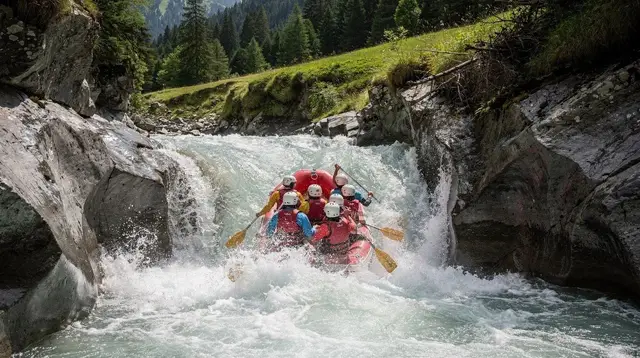
Canyoning is the sport of descending a narrow mountain gorge — a Klamm, in German — using the terrain itself as the route. Instead of walking around a waterfall, you go through or over it: sliding down smoothed rock chutes, jumping into deep plunge pools, abseiling down rope past drops too tall to jump, and swimming short stretches of cold, clear glacial water. It sits somewhere between hiking, swimming and controlled rock climbing, and none of those individual skills need to be advanced going in.
In the Ötztal, two gorges are the standard settings for guided canyoning: the Auerklamm and the Alpenrosenklamm. Both host tours pitched at different levels, including routes built specifically for people who have never done this before. The technical character of each gorge — its obstacles, its scenery, what makes one different from the other — is covered in dedicated guides; this page focuses on the beginner question rather than route-by-route detail.
Why the Ötztal Works for First-Timers
Three things make this valley a sensible place to try canyoning for the first time rather than somewhere to be nervous about.
First, the density of professional outfitters. Canyoning has been guided commercially in the Ötztal for decades, and operators run beginner-specific itineraries as a normal part of their summer program, not as an afterthought. Guides are trained specifically for gorge rescue and group management in moving water.
Second, full equipment provision. You are not expected to own or source any technical gear. A wetsuit thick enough for glacial meltwater, a helmet, a climbing harness and, on most tours, purpose-made canyoning shoes are issued at the start of the day and fitted before you set off.
Third, route selection that matches ability. Outfitters typically offer more than one canyoning itinerary in the valley, ranging from gentle introductions to physically demanding descents through longer, more technical sections. A beginner is placed on the route built for beginners, not thrown into the same descent as an experienced group.
What a Beginner Tour Actually Involves
A typical beginner canyoning day follows a predictable shape, even though exact timing and content differ by outfitter and by which gorge you’re booked into.
Meeting and briefing. You meet your guide at a set point — often in Sölden, Längenfeld or another Ötztal village — where gear is issued and fitted. This is also when the guide runs through basic technique: how to jump safely, how to position yourself for a slide, how the abseil rope and harness work.
The approach. A short walk, sometimes fairly steep, brings the group to the entry point of the gorge. This is usually the least remarkable part of the day and shouldn’t be skipped mentally — solid footwear matters even before the water starts.
The descent. Inside the gorge, the group moves from obstacle to obstacle: short swims across pools, rock slides polished smooth by centuries of running water, jumps of a few metres into water the guide has already checked for depth, and abseils down the taller drops using a fixed rope and your harness. The guide goes first or last at each obstacle, spots jumps, and can adjust the route on the day — some jumps can usually be bypassed via a ladder or a walked path for anyone who would rather not.
The finish. Groups exit the gorge, change out of wet gear, and the tour typically closes back near the meeting point.
None of this requires you to be strong, especially fit, or fearless. It requires a reasonable comfort in water, a willingness to follow instructions, and honesty with your guide about anything that worries you.
a canyoning tour built specifically for first-timers in the Ötztal is the most direct way to try the sport without guessing whether a route suits your level, and a beginner canyoning experience with full guiding and equipment covers the same ground with a different operator’s itinerary — worth comparing both against your dates and preferred meeting point.
When You Can Actually Go
Canyoning in the Ötztal is a summer activity, and this is not a minor caveat — it determines whether the sport is available at all on the dates you’re planning around.
| Period | Canyoning status |
|---|---|
| June to September | Season runs; water levels and temperatures suit guided descents |
| October to May | Not offered; gorges are closed to commercial canyoning |
Water flow, snowmelt and air temperature all need to line up for a gorge to be safely passable, which is why the season is fixed to summer rather than open year-round. If your trip to the Ötztal falls outside June to September, canyoning specifically won’t be on the table — plan for hiking, the Stubai Glacier, or other Ötztal activities instead, and see when to hike in Tyrol for the wider seasonal picture.
What’s Provided, and What You Should Bring
| Item | Who provides it |
|---|---|
| Wetsuit | Outfitter |
| Helmet | Outfitter |
| Harness and rope gear | Outfitter |
| Canyoning shoes (most operators) | Outfitter |
| Swimsuit (worn underneath) | You |
| Towel and dry change of clothes | You |
| Water and snack for after | You (recommended) |
Because outfitters vary in exactly what they include, always check the specific tour’s listing or confirmation email for anything unusual — some ask you to bring your own suitable footwear if you have it, others provide everything down to socks.
What Nobody Can Promise You: Price and Exact Duration
It would be easy to fill this section with a specific euro figure and a tidy “3.5 hours” and move on. We won’t, because neither number is reliable enough to publish responsibly: prices and tour lengths vary by outfitter, by which gorge you book, by group size, and by season, and they change from year to year. The honest and useful advice is to check the current price and duration directly on the tour listing or with the local operator before you book, rather than trust a number quoted out of context. What is consistent is the shape of the day described above and the fact that beginner routes exist as a distinct, deliberately gentler option from the more athletic descents.
If you want a sense of a more demanding version of the same sport for a later trip, a more physically demanding canyoning route through the Untere Auerklamm is aimed at people who already have a canyoning day or two behind them — not a first outing.
Fitness and Health: What’s Actually Required
You do not need to be an athlete. You do need:
- Comfort in water, including putting your face near or briefly under the surface. You don’t need to be a strong swimmer, but genuine fear of water is a real obstacle a wetsuit and a guide can’t fully solve.
- Basic mobility — climbing over wet rock, lowering yourself with a rope, walking on an uneven approach trail.
- No relevant heart or circulation conditions. Cold glacial water is a real physiological stressor; if you have a cardiac condition, are pregnant, or have a recent injury, say so when booking and let the outfitter advise.
- A minimum age, which most operators set for their beginner routes — check with the specific provider, especially if you’re planning to bring children, since limits differ by outfitter and by gorge.
Being nervous is normal and expected, and guides deal with nervous beginners constantly. Being unable to swim at all, or having an untreated fear of enclosed or rushing water, is worth discussing honestly with the outfitter before you commit.
Pairing Canyoning With the Rest of Your Ötztal Day
Canyoning tours usually take up a morning or an afternoon, which leaves room to build a fuller day around the valley. A soak afterwards at the AQUA DOME thermal spa in Längenfeld is the classic way to loosen up muscles that spent the morning bracing against cold water and rock. Families splitting a group between canyoning and gentler options often send non-canyoners to AREA 47 for the day, and the Ötztal ice caves and grottoes make a good lower-intensity add-on later in a multi-day stay.
Canyoning is not the only way to get wet and moving in this valley — the Imster Schlucht rafting route is a separate activity covered under whitewater rafting rather than here, and the two are genuinely different sports with different gear, groups and risk profiles; see rafting versus canyoning if you’re deciding between them for a single day.
The One Thing to Get Right Before You Go: Ötzi Isn’t Here
It’s worth saying plainly, because the mix-up is common and disappointing to discover on arrival: the Ötztal is named after the same general Alpine region where the Ötzi mummy was found, but Ötzi himself was discovered in 1991 at the Tisenjoch, on the Italian side of the border, and has been on permanent display in Bolzano, Italy, ever since. There is no museum, exhibit or site in the Austrian Ötztal where you can see him. If seeing the mummy matters to your trip, that means a separate excursion to South Tyrol — see our Dolomites and Bolzano day trip guide — not an add-on to a canyoning day in the valley that shares his name.
Booking Tips for First-Timers
A few practical points that make the difference between a smooth beginner day and an avoidable headache:
- Book ahead in July and August. Peak summer weeks fill outfitters’ beginner slots first, since it’s the most popular option for families and groups without prior experience.
- Check the meeting point, not just the town. Some tours meet in Sölden, others closer to Längenfeld or further down the valley near Imst — confirm before you plan your morning.
- Mention any concerns when booking, not on the day. Guides can adjust a route or reassure a nervous participant far more effectively with advance notice.
- Don’t plan anything strenuous immediately after. A morning of cold water and adrenaline is tiring in a way that’s easy to underestimate; an afternoon at the AQUA DOME or a quiet walk suits most people better than another high-energy activity.
- Weather can shift a tour. Heavy rain upstream raises water levels quickly in Alpine gorges; outfitters reschedule or cancel for safety rather than run a compromised route, so build a spare day into your itinerary if canyoning is a trip highlight rather than an optional extra.
Frequently Asked Questions About Beginner Canyoning in the Ötztal
Do I need any experience to go canyoning in the Ötztal?
No. Several outfitters in the valley run canyoning tours specifically designed for beginners. A guide leads every group, demonstrates each jump, slide and abseil, and adapts the route to the group’s confidence in the water.
What is the difference between the Auerklamm and the Alpenrosenklamm?
Both are gorges used for guided canyoning in the Ötztal, and both host beginner-suitable tours as well as more athletic ones. The specific features, obstacles and difficulty of each gorge are covered in their own dedicated guides rather than here.
Is canyoning in the Ötztal available all year?
No. Canyoning here is a summer activity, typically running from June to September when water levels and air temperature make the gorges safe and manageable. Outside that window, tours are not offered.
What equipment is provided, and what should I bring?
Outfitters supply the technical gear: a wetsuit, helmet, harness and canyoning-specific footwear in most cases. Bring a swimsuit to wear underneath, a towel and dry clothes for afterwards; the operator’s confirmation email will list anything extra they expect you to bring.
How much does a beginner canyoning tour cost, and how long does it last?
Prices and durations vary by outfitter, route and season, and are not fixed figures we can quote reliably here. Check current pricing and exact tour length directly with the local operator or on the specific tour listing before booking.
Can I see the Ötzi mummy while I’m in the Ötztal?
No. Despite the valley’s name, the Ötzi mummy was found in 1991 at the Tisenjoch, on the Italian side of the border, and is on permanent display in Bolzano, Italy. There is nowhere in the Austrian Ötztal to see it.
Is canyoning safe for someone who isn’t a strong swimmer?
Guided beginner routes are chosen and paced for exactly this. You will always be wearing a wetsuit, which adds buoyancy, and a guide manages the group through every section. That said, tell the operator in advance if you are a weak or nervous swimmer so they can place you on the right route.
What should I do with young children — can they join?
Age and height minimums vary by outfitter and by gorge, and some beginner routes are family-friendly while others are not. Confirm the minimum age directly with the tour provider before booking rather than assuming a child is included.
Canyoning and gorges on GetYourGuide
Verified deep-linked GetYourGuide tours. Book through these links and we earn a small commission at no cost to you.
GetYourGuide does not provide a product photo for this activity — the image shows the meeting point, photographed by us.