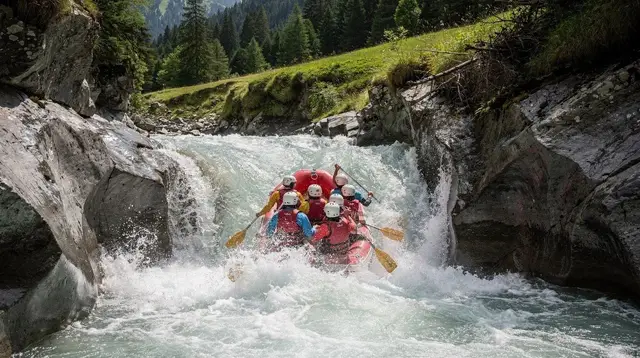
What to Bring Rafting in Tyrol: A Practical Packing Guide
What should I bring for a rafting trip in Tyrol?
Operators supply the wetsuit, splash jacket, helmet and paddle, so pack swimwear to wear underneath, a full change of warm dry clothes, closed-toe shoes that can get wet, a towel, and sun protection. Rafting runs from June to September on glacier-fed rivers that stay cold regardless of the air temperature, so confirm the exact equipment list with your booked operator before the day.
Packing for a Day on Tyrol’s Rivers
Whitewater rafting in Tyrol is one of the most approachable adventure activities in the region, and part of the reason is how little you actually need to bring yourself. Operators running trips on rivers like the Imster Schlucht and elsewhere in the Otztal supply the technical safety gear as standard, which means your own packing list is shorter and simpler than most people expect. This guide covers what to wear, what to pack, and what to leave at the hotel, along with the one detail that catches first-timers out every summer: the water is much colder than the air.
This page is deliberately general. It does not cover which operator to book or the specifics of any one river — for that, see the dedicated Imster Schlucht rafting guide. What follows applies broadly to a half-day or full-day rafting trip anywhere in Tyrol.
What the Operator Typically Provides
Rafting is a guided, equipment-heavy activity, and the core safety kit is part of the trip rather than something you source yourself. Across Tyrolean operators, the standard inclusions are the same handful of items:
| Item | Usually provided | Notes |
|---|---|---|
| Wetsuit | Yes | Full or shorty wetsuit, sized on arrival |
| Splash jacket / cag | Yes | Worn over the wetsuit for wind and spray |
| Helmet | Yes | Fitted before the safety briefing |
| Lifejacket (PFD) | Yes | Mandatory, checked by the guide |
| Paddle | Yes | Sized to you at the put-in |
| Neoprene shoes or booties | Sometimes | Confirm with your specific operator |
| Wetsuit socks or gloves | Rarely | Bring your own if you feel the cold easily |
That last row matters. Because inclusions can shift slightly from one operator to the next and between rivers, this guide will not hand you a definitive list of what a specific trip includes beyond the core five items above. If neoprene shoes, socks or gloves matter to your comfort, the reliable move is to check your booking confirmation or ask the operator directly before the day — not to assume a list you read online applies to your trip.
an Otztal whitewater rafting trip is a good starting point if you have not yet booked, since the listing itself will confirm what is included for that specific departure.
What You Should Bring
With the safety gear covered, your own packing list is about what goes under the wetsuit and what you need for before and after.
Before you get on the water
- Swimwear to wear directly under the wetsuit — trunks or a swimsuit, not cotton underwear, which stays cold and wet for hours.
- A thin synthetic or wool base layer, useful on cooler mornings or in the shoulder weeks of the rafting season (see below), worn under the wetsuit for extra warmth.
- Closed-toe shoes that can get completely soaked: old trainers, water shoes, or approach shoes. Sandals, flip-flops and bare feet are typically not accepted on safety grounds, so bring something suitable.
- Sun protection — sunscreen and, if you wear one, a strap-on hat or cap, since river days involve hours of direct sun reflected off the water.
- Contact lenses instead of glasses, if you can manage it, or a strap to secure glasses; a helmet and splashing water make loose eyewear a liability.
For afterwards
- A full change of dry, warm clothes. You will be thoroughly wet, and even on a hot Tyrolean summer day it is uncomfortable to sit around in cold, damp gear.
- A towel. Changing facilities at put-in and take-out points are often basic — a cabin or tent rather than a full changing room.
- A dry bag or plastic bag for wet items on the drive home, especially if you are staying somewhere without immediate laundry access.
- Flip-flops or slides for the drive back, since your rafting shoes will be wet.
What to leave behind
- Loose valuables. Wallets, watches and jewellery are best left at your accommodation rather than carried in a pocket that can open in the water.
- Cotton clothing worn as a base layer. It holds water and cold, unlike synthetic or wool alternatives.
- Unsecured electronics. A phone or camera without a proper waterproof housing and a lanyard is a real risk of loss on moving water; check with your operator about their policy before bringing one at all, and consider that many trips offer guide-taken photos as an alternative.
Layering for the Weather, Not Just the Water
Tyrol’s rafting season runs roughly from June to September, which on paper sounds like straightforward summer weather. In practice, Alpine river valleys can swing significantly between a warm midday and a cool, shaded morning departure, so it helps to think in layers rather than a single outfit.
| Layer | Purpose | Example |
|---|---|---|
| Base | Worn under the wetsuit | Swimwear, thin synthetic top |
| Insulation (optional) | Extra warmth in cool conditions | Thin wool or synthetic long-sleeve |
| Operator-provided | Waterproofing and impact protection | Wetsuit, splash jacket, helmet, PFD |
| Post-trip | Dry warmth after the run | Fleece, dry trousers, warm socks |
If you run cold easily, packing a lightweight insulating layer to wear under the wetsuit costs nothing to bring and can make a real difference on a river with meltwater-cold currents.
Why the Water Stays Cold All Summer
This is the detail that trips up visitors more than any packing item: Tyrol’s whitewater rivers, including those running through the Otztal, are fed substantially by glacier and snowmelt. That means water temperature does not track air temperature the way it might on a lowland river elsewhere in Europe. A 28-degree day in Imst or along the valley floor can still mean genuinely cold water on the raft, because the river’s source is high-altitude ice and snow rather than a sun-warmed reservoir.
The practical implications are straightforward:
- The wetsuit is not a formality — it is doing real work, and wearing it properly (zipped, fitted, without gaps at the neck or wrists) matters more here than it would on a warmer river.
- A short break floating or swimming, if your trip includes one, will feel colder than the air temperature suggests. Brief immersion is normal and expected; prolonged exposure without the wetsuit is not.
- Shivering after the trip, even in summer, is common enough that a warm, dry change of clothes is not an optional extra — treat it as essential kit.
- Early and late in the season (nearer June or September), meltwater volume and temperature can vary with recent weather upstream, which is one more reason schedules and conditions are confirmed by the operator on the day rather than fixed months in advance.
For more on how the rafting calendar in Tyrol works across the season, see when to go rafting in Tyrol.
A Note on Prices
If you are comparing rafting trips while packing your bag, one thing you do not need to budget for separately is tax. Austria displays prices with VAT already included, on menus, tickets and activity bookings alike — the price shown when you book a rafting trip is the price you pay, with nothing added at check-in or at the river. Any additional costs, such as a photo package or gear rental beyond what is standard, are typically flagged as optional add-ons at the time of booking rather than hidden extras.
Rafting Versus Other Whitewater Activities
Packing lists differ meaningfully between rafting and its closest cousin, canyoning, since canyoning typically involves more sustained water contact and different footwear demands. If you are deciding between the two, or considering both during the same Tyrol trip, the comparison in rafting versus canyoning: what’s the difference walks through the practical distinctions, including gear.
Families weighing up a rafting day should also note that age and size minimums vary by operator and river grade; the family-oriented options are covered separately in Otztal rafting for families.
Choosing a Trip
Several operators run whitewater trips out of the Otztal and around Imst, differing mainly in river section, group size and trip length rather than in the core equipment provided. For a broader sense of how the Otztal sits alongside Tyrol’s other valleys, Tyrol’s valleys compared is worth a look before you settle on a base. A shorter introductory run and a longer full-day trip both call for the same basic packing list above, so the choice between them is really about how much time and intensity you want, not what to bring.
A rafting tour through the Imster Gorge is one well-established option, running the whitewater section that gives the area its reputation. If you would rather book a trip framed around the Haiming stretch of the Inn and Otztal watershed, the Haiming white river rafting experience covers similar territory with a different departure point. Either way, the packing principles in this guide apply regardless of which specific trip or departure time you choose.
Getting There and Back
Most rafting trips in this region depart from meeting points in or near Imst or along the Otztal, often with transport included or arranged as an add-on from Innsbruck. If you are travelling without a car, check your booking for pickup details — some trips include transfer from Innsbruck, while others expect you to make your own way to the put-in point. With a spare few hours either side of the trip, a walk through Innsbruck’s Old Town or a ride up the Nordkette cable car makes an easy, dry pairing that does not need a hire car.
General guidance on getting around the valleys without a rental car is covered in public transport in Innsbruck: IVB and VVT, and if you are driving yourself, driving in Tyrol: vignette, tolls and winter tyres covers what a summer rental needs (winter tyre rules do not apply in rafting season, but the motorway vignette and Brenner toll still do if your route crosses them).
If rafting is one stop on a broader Otztal itinerary, the Otztal and Imster Schlucht whitewater itinerary sketches how a rafting day fits alongside other activities in the same valley, and the whitewater rafting category page lists the fuller range of trips across Tyrol if you want to compare beyond the operators mentioned here.
Final Checklist
A condensed version of everything above, to run through the night before:
- Swimsuit or trunks (worn under the wetsuit)
- Thin base layer, if you feel the cold
- Closed-toe shoes that can get wet
- Full change of dry, warm clothes
- Towel
- Sunscreen
- Dry bag or plastic bag for wet gear afterward
- Flip-flops for the drive home
- Confirmation email checked for your specific operator’s inclusions
Everything else — the wetsuit, splash jacket, helmet, lifejacket and paddle — is the operator’s job to provide and fit on the day.
FAQ: What to Pack for Rafting in Tyrol
Do I need to bring my own wetsuit for rafting in Tyrol?
No. Tyrolean rafting operators standardly include the wetsuit, a splash jacket or cag, a helmet, a lifejacket and the paddle in the trip price. What you bring is what goes on underneath and what you change into afterwards.
What should I wear under the wetsuit?
A swimsuit or trunks, plus a thin synthetic or wool base layer if the day is cool, work well under a rented wetsuit. Cotton underwear is the wrong call because it stays wet and cold for the rest of the trip.
Is the river water cold even in summer?
Yes. Tyrolean whitewater rivers such as those in the Otztal are fed by glacier and snowmelt, so the water stays cold from June through September regardless of how warm the air feels on the riverbank.
What shoes are best for rafting?
Closed-toe shoes that can get soaked and grip a wet raft floor are what operators expect: old trainers, water shoes or approach shoes. Flip-flops, sandals and bare feet are generally not accepted for safety reasons, so check with your operator if you are unsure.
Should I bring a change of clothes?
Yes, a full change of warm, dry clothing plus a towel for after the trip is standard advice, since you will be wet through and the changing facilities at most put-in points are basic.
Can I bring a phone or camera on the raft?
Only if it is properly secured or waterproof, and only if your operator allows it. Many trips prohibit loose electronics on the water and instead offer photo packages taken by guides or fixed cameras along the run.
Do prices include VAT, or is tax added later?
Displayed prices in Austria already include VAT. The price you see when booking a rafting trip is the price you pay, with no tax added at the counter.
What if I’m not sure what a specific operator provides?
Equipment lists vary slightly between operators and rivers, so the reliable step is to check the confirmation email or ask directly before the trip rather than assume a standard list applies everywhere. Rafting trips in the Imster Schlucht and similar Otztal listings usually spell out inclusions clearly in the booking details.
Whitewater rafting on GetYourGuide
Verified deep-linked GetYourGuide tours. Book through these links and we earn a small commission at no cost to you.
GetYourGuide does not provide a product photo for this activity — the image shows the meeting point, photographed by us.