Via Ferrata Gear and Safety Basics for the Tyrolean Alps
What gear do I need for a via ferrata in Tyrol?
A climbing helmet, a full-body or combined harness, and a certified via ferrata lanyard with an energy-absorbing brake are the three non-negotiable items. Sturdy hiking or approach boots, weather-appropriate layers, and gloves round out the kit. First-timers should rent this gear from a certified provider and book a mountain guides' office rather than assembling it alone.
Via ferrata — “iron road” — is the reason so many visitors to Tyrol end up clipped to a steel cable on a cliff face they would never have attempted to free-climb. Ladders, rungs and cables bolted into the rock turn genuinely exposed terrain into something a reasonably fit hiker can climb, and the Tyrolean Alps around Innsbruck have dozens of routes ranging from short introductory sections to multi-hour alpine outings. None of that makes it a casual activity.
This page is deliberately generic: it covers the equipment and precautions that apply to any via ferrata in the region, without pointing you at a specific route, because the route choice depends on fitness, experience and conditions that a general gear guide cannot judge for you. For named routes, see the dedicated pages on the Nordkette, the Karwendel and the Wilder Kaiser.
Before You Clip In: What a Via Ferrata Actually Demands
A via ferrata is not a hiking trail with a handrail. Sections can run up vertical or overhanging rock, cross exposed ledges with a long drop below, and require sustained arm and grip strength rather than just steady legs. Weather changes fast at altitude, loose rock is a real hazard even on well-maintained routes, and rescue from a mid-route position is slow and difficult. Treat any via ferrata — including ones described as “easy” or “family” — as a mountain activity that combines the exposure of climbing with the endurance demands of a long hike.
That combination is exactly why the gear below is not a suggested packing list but a minimum standard. Guides’ offices and equipment rental shops across Tyrol will not let a client onto a route without it, and that is not excessive caution.
The Three Pieces of Gear You Cannot Skip
Climbing Helmet
Rockfall, and falling gear or debris from climbers above, are real risks on almost every via ferrata, even on routes that feel more like a steep walk. A certified climbing helmet — not a bike helmet — is worn for the entire route, buckled, from the first rung to the last. It is the cheapest and least negotiable item on this list.
Harness
A climbing harness, worn snugly around the waist and thighs, is the anchor point for the lanyard described below. Full-body harnesses are sometimes used for lighter climbers and children, since they distribute a fall’s force more evenly and prevent the wearer flipping upside down. Fit matters: a loose harness can shift or ride up under load, so anyone renting one should have it checked by staff rather than adjusting it themselves and hoping.
Via Ferrata Lanyard (Energy Absorber Set)
This is the piece that actually keeps a fall survivable, and it is not interchangeable with ordinary climbing gear. A via ferrata lanyard is a short Y-shaped tether with two carabiners, so the climber can unclip and re-clip one arm at a time past each cable anchor while always staying attached with the other. Built into the tether is an energy absorber — typically a folded strip of webbing designed to tear progressively, or a friction-brake mechanism — that spreads the force of a fall over a longer time and distance.
Without it, a fall onto a rigid tether or a plain sling transmits near-instant, potentially spine- or organ-damaging force to the climber’s body, even from a short drop. A rope or sling tied directly to a harness is never an acceptable substitute for a certified via ferrata set, no matter how experienced the climber.
A Practical Gear Checklist
| Item | Purpose | Notes |
|---|---|---|
| Climbing helmet | Protects against rockfall and impact | Certified (CE/UIAA), not a bike or ski helmet |
| Harness (seat or full-body) | Anchor point for the lanyard | Rental staff should check the fit |
| Via ferrata lanyard with energy absorber | Limits fall force via a designed brake system | Never substitute a plain rope or sling |
| Via ferrata gloves | Protect hands on rough steel cable and rock | Half-finger gloves keep dexterity for clipping |
| Sturdy hiking or approach boots | Grip and ankle support on rungs and rock | Broken-in, with a stiffer sole than trail runners |
| Backpack (small, close-fitting) | Carries water, layers, first-aid kit | Avoid loose straps that can snag on cable |
| Weather layers | Alpine weather shifts fast, even in summer | Wind shell at minimum, even on a warm forecast |
| Headlamp | Backup light if a route takes longer than planned | Small, packed even on a short summer route |
Clothing, Footwear and the Small Things That Matter
Temperature at 2,000 to 3,000 metres can be 15 to 20 degrees colder than the valley floor, and wind on an exposed ridge amplifies that further. Dress in layers that can go from a warm approach hike to a cold, windy cable section without a full gear change. Long trousers and a long-sleeved layer protect forearms and shins from rough rock and cable, and via ferrata-specific gloves — half-finger designs are common — protect the palms from wear on steel cable over a multi-hour route.
Footwear deserves more thought than it usually gets. Trail running shoes are fine for approach trails but are often too soft-soled for standing securely on narrow steel rungs for long stretches; a stiffer hiking or approach boot gives better precision and reduces foot fatigue. Whatever is worn should already be broken in — a via ferrata day is the wrong place to discover a new boot causes blisters.
Guided or Independent? Why Beginners Should Book a Guides’ Office
Experienced climbers with their own inspected gear and route knowledge often climb via ferrata independently, and that is a reasonable choice for them. For a first attempt, or for anyone unfamiliar with clipping technique, exposure, or how to read a mountain forecast, a certified mountain guides’ office changes the risk profile substantially.
| Independent | Guided | |
|---|---|---|
| Gear | You source, fit and inspect it yourself | Fitted and checked by a professional |
| Technique | Self-taught from videos or friends | Demonstrated and corrected on easy ground first |
| Route and weather judgement | Your own assessment | A guide reads local conditions daily |
| Group support | None built in | A guide can manage pacing and problems mid-route |
| Cost | Lower (gear rental only) | Higher, but includes instruction and judgement |
| Best for | Climbers with prior via ferrata or climbing experience | First-timers, families, anyone unsure of their fitness or nerve |
Even a strong hiker with no prior cable-route experience benefits from an hour of instruction on clipping sequence, weight transfer, and what to do if another climber above dislodges rock — none of which is intuitive the first time. A guides’ office also carries current knowledge of which routes are actually open, which is not something a gear list can substitute for.
When the High Alpine Actually Opens
Via ferrata routes sit on rock that needs to be free of snow and ice to be climbable safely, and that window is shorter than most first-time visitors expect.
| Period | What to expect |
|---|---|
| December to March | Via ferrata routes closed; this is ski season in the valley and on the glaciers |
| Mid-April to end of May | Shoulder season: many supporting lifts and mountain huts close for maintenance, and high rock can still hold snow and ice |
| Late June to early July | Routes typically begin opening, later in a heavy snow year |
| Mid-July to early September | The reliable core season for most Tyrolean via ferrata routes |
| Late September to October | Still climbable in settled weather, but days shorten and early snow becomes a risk |
| November | Shoulder season again: lifts and huts largely closed, and this is not a realistic window for via ferrata |
This mirrors the pattern across Tyrol’s high mountains generally: when to hike in Tyrol walks through the same late-June-to-September logic for trails, and the two shoulder windows described there apply just as directly to via ferrata routes and the mountain huts that support them. Always check a specific route’s and lift’s operating dates before travelling — a route being technically climbable is not the same as its supporting infrastructure being open.
Where to Put This Knowledge to Use
This page deliberately stays generic because gear and safety rules don’t change from mountain to mountain, but route difficulty, exposure and access very much do. For route-specific planning, the dedicated pages cover what actually differs:
- The Innsbruck Nordkette cable car guide explains access to the mountain that rises straight out of the city, and Nordkette hiking trails covers the walking network around it.
- The Karwendel via ferrata guide and the broader Karwendel hiking guide cover Tyrol’s largest nature park, north of the city.
- The Wilder Kaiser climbing guide covers the limestone peaks east of Innsbruck around Ellmau, Söll and Scheffau.
- A broader roundup of options sits at via ferrata routes near Innsbruck, and the climbing and via ferrata category collects bookable experiences.
- For a multi-day trip built around mountain days rather than a single route, see the alpine hiking week itinerary, and the general hiking and mountains category for non-cable alternatives.
- On why the awkward shoulder-season closures are worth planning around rather than fighting, see why the shoulder seasons are worth the risk.
A number of guided via ferrata experiences run directly from the Innsbruck area and include gear, instruction and a certified guide as part of the booking, which removes the gear-sourcing problem entirely for a first attempt. One well-reviewed option is the via ferrata outing near Innsbruck that finishes at a genuinely alpine viewpoint, run with full equipment supplied.
Further west, the Ötztal has its own established routes, including a guided climb beside a waterfall in the Ötztal and a longer guided route with sweeping alpine views further into the valley, both suited to a first via ferrata attempt precisely because a certified guide manages the gear and the judgement calls.
Habits That Keep a Via Ferrata Day Safe
Beyond the equipment itself, a handful of habits separate an uneventful via ferrata day from a dangerous one:
- Check the mountain forecast, not the valley one. Innsbruck’s old town can be warm and clear while the ridge above is in cloud with a thunderstorm building; afternoon storms are a genuine summer pattern in the Alps.
- Start early. Most serious alpine thunderstorms in summer build through the afternoon. Being off the exposed cable sections by early-to-mid afternoon is standard practice, not overcaution.
- Never unclip both carabiners at once. The entire point of the two-armed lanyard is that one stays attached while the other moves past an anchor point — always.
- Keep distance from other climbers on the cable. A fall or dislodged rock from someone above can affect the person directly below; guides typically manage spacing on busier routes for this reason.
- Know your turnaround point. Deciding in advance where you will turn back if weather, fatigue or nerves become a problem is far easier than deciding mid-route.
- Match the route grade to your actual experience, not your aspiration. Via ferrata grading schemes vary, but a first attempt is not the place to test the hardest route in a valley.
None of this is designed to make via ferrata sound frightening rather than worthwhile — thousands of visitors climb safely in Tyrol every summer. It is designed to make clear that the activity earns its reputation as an accessible way into serious mountain terrain precisely because the standard gear and standard precautions do real work. Skipping either is where the accessibility stops.
Frequently Asked Questions About Via Ferrata Safety in Tyrol
Is via ferrata dangerous for beginners?
It can be. A via ferrata replaces rope and rock protection with fixed steel cables, ladders and rungs, but exposure, loose rock, weather and fatigue are all still real. Falls onto a via ferrata cable without an energy-absorbing lanyard can cause serious injury even over a short distance, which is exactly why that piece of gear exists and is never optional.
Can I do a via ferrata without a guide?
Experienced climbers with their own certified gear and route knowledge routinely climb independently, but a first via ferrata in the Tyrolean Alps is best done with a mountain guides’ office. A guide checks gear fit, teaches clipping technique on easy ground, and reads conditions and weather in ways a first-timer cannot yet do alone.
What is a via ferrata lanyard and why does it matter so much?
It is a short, forked tether that clips to the fixed steel cable with two carabiners, so at least one is always attached while the other is moved past an anchor. Built into it is an energy absorber — a folded webbing or friction brake — that tears or slides under load to dramatically reduce the force transmitted to the climber’s body in a fall. A plain sling or rope tied to a harness cannot do this and must never be used as a substitute.
Do I need my own harness and helmet, or can I rent everything?
Renting is normal and often the better choice for a first via ferrata, since equipment rental shops and guides’ offices fit the harness and helmet correctly and supply a lanyard that is inspected and in date. Anyone climbing more than once or twice a season is better off owning a harness and helmet that fit properly, since a badly fitted harness is a real safety issue, not just a comfort one.
When is via ferrata season in the Tyrolean Alps?
The reliable window is roughly from late June or July through September, once winter snow has cleared from higher rock. Conditions vary by winter and by aspect, so a route that is clear in late June one year may still hold snow patches the next. Many mountain huts and lifts that support these routes close completely during the shoulder seasons, from around mid-April to the end of May and again through November.
What else besides gear should I check before a via ferrata day?
Check the weather forecast for the specific mountain, not just the valley, since afternoon thunderstorms are common in the Alps in summer and steel cable is a poor place to be during one. Check that the route and any supporting lift or hut are actually open for the season, start early enough to be off the exposed sections before storms typically build, and carry water, a headlamp, and a basic first-aid kit.
Are children allowed on via ferrata routes?
Some easier routes are marketed as family-friendly, but via ferrata always involves exposure, cable, and the possibility of a fall, so any child taking part needs a properly fitted harness and helmet, a child-appropriate lanyard, and close supervision — ideally through a guides’ office that runs family programmes rather than an ad hoc family outing.
Climbing and via ferrata on GetYourGuide
Verified deep-linked GetYourGuide tours. Book through these links and we earn a small commission at no cost to you.
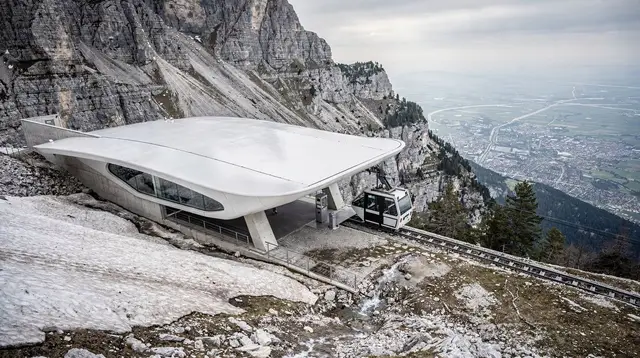
GetYourGuide does not provide a product photo for this activity — the image shows the meeting point, photographed by us.