Is the Wilder Kaiser a Climbing and Via Ferrata Destination?
Is the Wilder Kaiser a serious climbing and via ferrata destination?
Yes, in reputation — the Wilder Kaiser is the limestone massif behind Ellmau, Söll and Scheffau in the Kitzbühel Alps, in the Kufstein-Kitzbühel region east of Innsbruck. This guide does not list specific routes or grades, since those change season to season and are best confirmed with a local mountain guide office before you go.
What the Wilder Kaiser Massif Actually Is
The name comes up often enough in conversations about climbing in Tyrol that it deserves a straight answer: the Wilder Kaiser is a limestone massif in the Kitzbühel Alps, rising above the villages of Ellmau, Söll and Scheffau, in the Kufstein-Kitzbühel corner of Tyrol.
It sits well east of Innsbruck, in a different part of the region from the Nordkette or the Karwendel closer to the city — this is not a peak you reach on a cable car from the old town, but a destination in its own right, generally approached by road through the Kitzbühel Alps or from St. Johann in Tirol.
Among climbers and via ferrata enthusiasts across the German-speaking Alps, the Wilder Kaiser has a genuine reputation. It is mentioned, together with its neighbouring villages, as one of the recognisable names of the region’s higher terrain — jagged limestone walls that stand out sharply against the softer, greener hills around Westendorf and the rest of the Kitzbühel Alps. That reputation is real. What this guide will not do is pretend to know more about it than is safely confirmed.
Why This Page Doesn’t List Routes or Grades
If you have searched for the Wilder Kaiser hoping for a rundown of named climbing routes, specific via ferrata lines, or UIAA and Hüsler grades, you won’t find them here — deliberately. Route conditions on any alpine massif change from one season to the next: a fixed cable can be damaged over winter, a rockfall can close an approach, a hut supporting a route can shift its opening dates, and a route considered straightforward one year can be reported as compromised the next. Publishing a specific route name or a difficulty grade on a general travel site, without a way to verify it against this week’s conditions, is how visitors end up on terrain that no longer matches the description they read.
That is not a limitation unique to this page. It is how responsible route information works everywhere in the Alps: the people who know whether a given line is currently protected, whether recent weather has affected rock quality, and whether the season has properly opened are the certified mountain guide offices based in the Kitzbühel Alps villages, not a travel guide written months in advance. If you are planning a climbing or via ferrata trip to the Wilder Kaiser, treat a local guide office as your primary source, and treat anything you read online — including this page — as background only.
What Is Confirmed, in Plain Terms
Here is what can be stated with confidence about the Wilder Kaiser as a climbing and via ferrata destination, without overstating the specifics:
| What’s confirmed | What isn’t covered here |
|---|---|
| The massif sits above Ellmau, Söll and Scheffau, in the Kitzbühel Alps | Names of individual climbing routes or via ferrata lines |
| It carries a real reputation for climbing and via ferrata among Alpine visitors | Difficulty grades, cable types, or route lengths |
| High routes depend on the season, generally opening from late June or July | Exact opening dates for any given year |
| Local guide offices track current conditions | Specific hut names, approach times, or descent routes |
| The wider Kitzbühel Alps offer gentler activities for non-climbers | Ratings of which operator or guide office to book |
If a route name, a grade, or a claimed opening date appears somewhere else online attached to the Wilder Kaiser, treat it as something to verify locally rather than something to plan a trip around sight unseen — the same caution that applies to any high-mountain terrain in the Alps.
Season: Why Timing Matters More Than the Route Itself
Across Tyrol’s high terrain — the Wilder Kaiser included — climbing and via ferrata routes are a warm-season activity. Snow typically lingers on higher ground into early summer, and most routes above roughly two thousand metres of elevation become reliably accessible only from late June or July, depending on how the preceding winter played out. The window then generally holds through the summer and into early autumn, narrowing again as the first snow returns to the high ground.
This is the same seasonal pattern that governs hiking and via ferrata routes elsewhere in the region — see the general season guide for hiking in Tyrol for the underlying logic, which applies just as much to the Wilder Kaiser as to routes closer to Innsbruck. A guide office contacted in spring, before the season has properly opened, will typically be candid that it is too early to commit to a date — that caution is a sign of a guide office worth using, not a reason to look elsewhere.
Outside that window — in winter, and through the shoulder months of April, May and November — the Wilder Kaiser’s climbing and via ferrata terrain is not the reason to visit. The massif is still visible and still dramatic from the valley floor, but the routes themselves are for the warmer months only.
Booking Through a Guide Office, Not a Guidebook
For anyone without detailed, current knowledge of the Wilder Kaiser’s terrain, the practical path is a certified mountain guide office based in the Kitzbühel Alps — in Ellmau, Söll, Scheffau, Kufstein or St. Johann in Tirol. A guide office does three things a travel page cannot:
- Confirms which routes are currently in condition, and which are closed for maintenance, rockfall repair, or weather damage.
- Matches a route to your actual experience level, rather than to a grade printed somewhere online months earlier.
- Carries the equipment, local weather judgement, and rescue-coordination knowledge that a self-guided visitor without local ties would otherwise have to assemble from scratch.
If you already climb regularly and are simply looking for orientation before contacting a guide office, the general reference points for via ferrata planning in Tyrol — equipment, safety basics and how routes are typically graded — are covered separately: see the via ferrata routes near Innsbruck overview and the via ferrata gear and safety basics guide. Neither of those pages names specific Wilder Kaiser routes either, for the same reason this one doesn’t — but they explain the equipment and safety judgement that applies across all of Tyrol’s via ferrata terrain, the Wilder Kaiser included.
While You Wait for the Season, or If Climbing Isn’t Your Thing
Not every visitor to the Kitzbühel Alps is there to climb, and even committed climbers often have a day or two either side of a booked route with nothing scheduled. The villages beneath the Wilder Kaiser run a genuinely broad spread of activities that need no climbing background and no season window nearly as narrow as high alpine routes:
For families or anyone easing into height and exposure gradually, a treetop rope and climbing course at the Hornpark in St. Johann in Tirol is a controlled, supervised way to spend a few hours off the ground without needing any alpine experience. It sits close enough to the Wilder Kaiser villages to combine naturally with a climbing-focused trip, whether as a warm-up or as the main event for a non-climbing member of the group.
For a gentler start to the day that still gets you moving in the mountains, an early sunrise hike and yoga session at Ellmau am Wilden Kaiser puts you on the lower slopes of the massif at first light — no technical climbing, but a direct view of the terrain that gives the Wilder Kaiser its reputation.
If you’d rather cover ground than climb it, an e-bike tour around Ellmau am Wilden Kaiser is a low-effort way to explore the valley floor beneath the massif, and a guided e-bike adventure tour out of Ellmau extends that further into the surrounding hills, for visitors who want a day of mountain scenery without ropes.
The Wider Region, and What This Page Deliberately Skips
This page is scoped narrowly to the Wilder Kaiser’s reputation as climbing and via ferrata terrain, and it stays there on purpose. Two things it does not cover:
The villages as places to stay. Ellmau, Söll and Scheffau are destinations in their own right — for skiing, hiking, and general Tyrolean village life — and deserve their own planning rather than a mention tucked inside a climbing page. If you’re weighing where to base yourself in the region, that comparison belongs elsewhere on the site, not here.
Standard hiking trails. The Wilder Kaiser also carries well-used hiking paths that are a different proposition from technical climbing or via ferrata routes — lower-commitment, generally open earlier in the season, and suited to a much wider range of visitors. Those trails are a separate topic from the technical terrain this page addresses.
For a broader look at multi-day alpine activity in the region, the Alpine Hiking Week itinerary frames a week of high-mountain activity across Tyrol, of which a Wilder Kaiser guide-office booking could reasonably form one day. And for climbers weighing other paragliding or adrenaline options in the same corner of the Alps, tandem paragliding over the Kitzbühel Alps from Westendorf and tandem paragliding from the Nordkette sit at opposite ends of the region and both make a reasonable alternative activity if weather rules out a climbing day.
Getting There Without Your Own Car
The Wilder Kaiser villages are reachable without a hire car, though the connection is less direct than the funicular-and-cable-car access closer to Innsbruck. Kufstein and St. Johann in Tirol both sit on regional rail lines, and onward local buses run from those stations into Ellmau, Söll and Scheffau — the three villages that ring the massif.
This is a workable option for a base built around public transport, but it is worth building slack into the schedule either side of a guide-office booking: a missed connection on the way in matters far more when the other end of the trip is a fixed appointment with a certified guide, roped equipment and a group waiting on you. Anyone travelling this way should check current timetables directly with the regional transport operator rather than assume a fixed frequency, since rural bus schedules in this corner of Tyrol thin out noticeably outside the main summer season.
Driving remains the more flexible option for most visitors, not least because a guide office may want to meet at a trailhead or car park rather than in the village centre itself, depending on which side of the massif that day’s route approaches from. If you’re coming from Innsbruck rather than staying locally, treat the drive out to the Kitzbühel Alps as a genuine day-trip commitment in its own right, distinct from the shorter hops out to the Nordkette or the Karwendel — the Wilder Kaiser sits far enough east that combining it with an Innsbruck city stay on the same day is not realistic once a guided route is factored in.
What a Half-Day Near the Wilder Kaiser Looks Like
For a visitor who isn’t climbing that particular day — waiting on a guide office to confirm conditions, travelling with a mixed-ability group, or simply building in a rest day — a half-day near the massif tends to follow a similar shape regardless of which village it’s based in. A gentle start on the valley floor, whether that’s the sunrise hike above Ellmau or a slower walk along one of the lower paths, uses the cooler morning hours before the day warms up.
Late morning into early afternoon suits something more active but still non-technical, such as an e-bike route along the valley or a treetop course for anyone travelling with children. The afternoon is often when local weather in this part of Tyrol turns unsettled, which is as good a reason as any to plan the day’s higher-commitment activity for the morning and leave lighter options for later.
None of this replaces a guide office’s own scheduling advice once a specific climbing or via ferrata booking is in the picture — a guide will tell you what time to be where, and that instruction overrides any general pattern described here. But for the stretches of a trip that fall outside a booked route, treating the villages beneath the Wilder Kaiser as a base for this kind of lower-commitment activity, rather than as a waiting room until the next climb, makes better use of time that would otherwise go to waste watching the massif from below.
One Clarification Worth Repeating
The Wilder Kaiser is entirely a Tyrolean, Austrian mountain range, in the Kufstein-Kitzbühel region east of Innsbruck. It has no connection to South Tyrol — Südtirol, or Alto Adige in Italian — which lies across the Brenner Pass in a different country altogether, and which is covered on this site as a genuinely separate day-trip destination. Alpine massif names repeat across the wider Alps in ways that occasionally cause confusion for first-time visitors researching online; the Wilder Kaiser above Ellmau, Söll and Scheffau in Austria is not it. See why Tyrol is not South Tyrol if that distinction matters to your trip planning more broadly.
Overview by Season
| Period | Wilder Kaiser climbing and via ferrata | What to do instead |
|---|---|---|
| Winter (Dec-Mar) | Not the season for climbing or via ferrata | Skiing, valley walks, climbing and via ferrata category for other-season research |
| Shoulder (Apr-May, Nov) | Routes typically still closed or uncertain | Treetop courses, e-biking, lower-elevation activities |
| Early summer (late Jun-Jul) | Season generally opening — confirm with a guide office | Sunrise hikes, e-bike tours while conditions firm up |
| Mid-to-late summer (Aug-Sep) | Peak window, subject to that year’s weather | Book via a certified guide office |
| Early autumn (Oct) | Window closing, weather more variable | Guide office can advise on remaining days |
The single most useful step for anyone serious about climbing or via ferrata on the Wilder Kaiser is the same at any point in this table: contact a certified guide office based in the Kitzbühel Alps, describe your experience level and preferred dates, and let them confirm what is actually open and appropriate — rather than relying on a fixed route name found in advance.
Climbing and via ferrata on GetYourGuide
Verified deep-linked GetYourGuide tours. Book through these links and we earn a small commission at no cost to you.
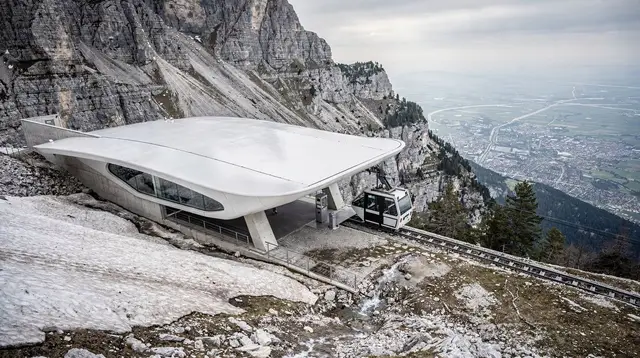
GetYourGuide does not provide a product photo for this activity — the image shows the meeting point, photographed by us.