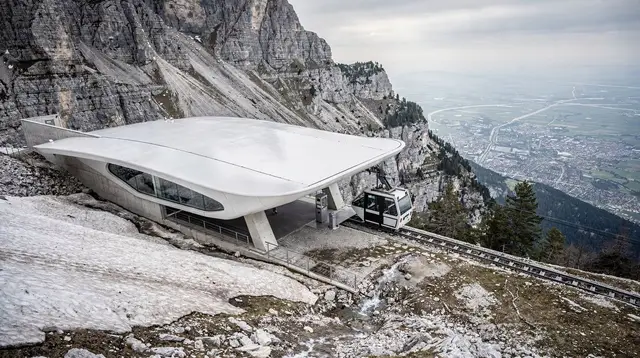
Olympia SkiWorld Innsbruck: The Nine-Mountain Ski Pass
What does the Olympia SkiWorld Innsbruck pass actually cover?
It is a single pass covering nine separate ski areas around the city — Nordkette, Patscherkofel, Axamer Lizum, Muttereralm, Kühtai, Schlick 2000, Rangger Köpfl, Glungezer and the Stubai Glacier. Free ski buses connect Innsbruck to each of them, so visitors can base themselves in the city and ski a different mountain every day rather than committing to one resort.
Nine mountains, one city, one pass
Most ski trips mean picking a single resort and staying put for the week. Innsbruck offers a different deal: a valley city of about 131,000 people, ringed by nine separate ski areas, all linked to the centre by free shuttle buses. The pass that ties this together is called the Olympia SkiWorld Innsbruck ski pass, and understanding how it works — rather than what it costs on a given date — is what actually decides whether a stay here beats booking a single resort in the Kitzbühel Alps or the Arlberg instead.
The pass is not a discount on one mountain. It is a single lift ticket, valid across nine independent ski areas scattered around the Inn valley, reachable from the same hotel room in Innsbruck without repacking the car. That structure — one base, nine mountains, free transport between them — is the reason the city bills itself as a ski destination in its own right, not just a gateway to somewhere else.
The nine ski areas, at a glance
Each of the nine areas in the Olympia SkiWorld network has its own lift system, its own character, and (for most of them) its own dedicated guide on this site with trail detail, difficulty and access notes. This page is about how the pass ties them together, not about skiing each one — but a quick orientation helps before the logistics.
| Ski area | Character | Distance from the city |
|---|---|---|
| Nordkette | Steep freeride terrain rising directly above the old town | Inside the city limits |
| Patscherkofel | Gentler slopes above Igls, 1964 and 1976 Olympic downhill venue | About 20 minutes |
| Axamer Lizum | Broad intermediate and family terrain, near Axams | About 25–30 minutes |
| Muttereralm | Compact, family-friendly area above Mutters | About 20–25 minutes |
| Kühtai | High-altitude area, reliable snow, near Sellrain | About 45 minutes |
| Schlick 2000 | Above Fulpmes in the Stubai valley | About 40 minutes |
| Rangger Köpfl | Smaller, quieter area above the Sellrain valley | About 30 minutes |
| Glungezer | Panoramic ridge terrain above the Wipptal | About 30 minutes |
| Stubai Glacier | Austria’s largest glacier ski area, long season | About 45 minutes |
That spread matters because the nine areas are genuinely different in size and difficulty, not nine versions of the same slope. A freeride skier who spends a morning on the Nordkette’s steep pistes above the Hungerburg can, the next day, take a beginner in the family on the easier runs at Axamer Lizum or Muttereralm, and later in the trip head up to the Stubai Glacier for a day when the valley slopes are thin. None of that requires changing hotels.
How the free ski buses actually work
The detail that makes the whole system function is transport, not the lift network itself. Each of the nine areas is connected to Innsbruck by a dedicated ski bus service that runs free of charge to pass holders. Buses depart from set points around the city — commonly outside major hotels and from the centre — on a published morning and afternoon schedule timed around typical lift opening and closing hours.
In practice, that means a visitor staying in the old town or anywhere well-served by the city’s IVB network does not need a rental car to reach most of these mountains, and does not pay extra for the ride once they hold the pass. This is unusual: most multi-resort ski passes in the Alps assume visitors are driving between valleys or basing themselves in a series of different ski villages. Innsbruck’s version assumes the opposite — one bed, nine mountains, and the transport built into the pass itself.
a guided sunrise outing on the Patscherkofel, for example, works well as a one-off addition on a day the shuttle schedule allows an early start, since Patscherkofel is one of the closer areas and the lift opens onto genuine Olympic downhill history above Igls.
It is worth checking the current shuttle timetable and pick-up points directly with the pass operator before travelling, since schedules are adjusted between seasons and can vary between midweek and weekend service. The practical rule of thumb locals repeat is straightforward: buses run early enough to catch first lifts and late enough to get skiers back into town for dinner, but they are not on-demand, so building a day around the timetable — rather than assuming buses run constantly — avoids frustration.
Why “sleep in the city, ski a different mountain daily” actually works here
The pitch sounds like marketing until it is broken down into what it removes from a ski trip. Staying in a single resort village usually means one restaurant scene, one lift system, and a fixed level of difficulty and snow condition for the whole stay. Basing in Innsbruck and using the Olympia SkiWorld pass removes all three constraints at once:
- Snow conditions vary by mountain and altitude, and the network spans roughly 900 m of base elevation difference between the lowest slopes and the Stubai Glacier’s high terrain — so a thin snow day on one mountain does not have to mean a thin snow day everywhere.
- Difficulty varies by area, so a mixed-ability group can split up in the morning — beginners to Axamer Lizum or Muttereralm, confident skiers to the Nordkette or Kühtai — and regroup back in the city in the evening.
- The city itself stays a functioning destination, not a ski-lodge cluster that empties out after dinner. Restaurants, the old town, museums and evening life around Maria-Theresien-Straße are all a short walk or tram ride from the hotel, whatever mountain was skied that day.
The trade-off is a bus ride at each end of the ski day, roughly 20 to 45 minutes depending on the area, rather than stepping directly out of a resort hotel onto the piste. For a short weekend trip focused on a single mountain, that overhead may not be worth it. Over four days or more, spread across two or three different areas, most visitors find the variety outweighs the commute.
What this pass does not cover
Two mix-ups come up often enough to flag directly. First, the Olympia SkiWorld pass does not include the Hintertux Glacier. Hintertux sits in the Zillertal, a separate valley east of Innsbruck near Mayrhofen, and it operates on its own ticketing outside this network — it is the one glacier in Tyrol that genuinely skis year-round, but it is a different day trip entirely from anything on this pass. Anyone planning to ski Hintertux needs to treat it as a standalone excursion, not part of an Olympia SkiWorld itinerary.
Second, several well-known Tyrolean ski destinations sit outside the Olympia SkiWorld network altogether. Kitzbühel and the Wilder Kaiser villages, the Arlberg around St. Anton, and Sölden in the Ötztal are all reachable from Innsbruck but require their own separate lift tickets — the nine-area pass does not extend that far. Visitors wanting one of those specific resorts should plan them as add-on day trips with their own tickets, not assume Olympia SkiWorld covers them.
Pricing: check the operator, not this page
This guide deliberately does not quote a euro figure for the pass. Ski pass pricing changes between seasons, by number of days, and sometimes mid-season, and a number printed here would risk being wrong by the time it is read. The reliable approach is to check the current day, multi-day and season rates on the official Olympia SkiWorld Innsbruck website shortly before travelling, and to compare that against the cost of individual tickets for the one or two mountains actually likely to be skied — for a short stay focused on a single area, a standalone ticket for that mountain alone can work out simpler and is worth pricing side by side.
The Innsbruck Card is a separate product covering museums, city transport and cable car return trips, and it is not a substitute for a ski pass — the two serve different trips and are sometimes confused by first-time visitors comparing prices online.
Planning a ski week around the pass
A practical week built around the Olympia SkiWorld pass tends to follow a simple pattern: pick a central hotel with easy access to the ski bus pick-up points, check each area’s opening dates and conditions the evening before (not every area runs full operations every day of the season, especially at the edges of winter), and rotate mountains based on snow report and group mood rather than sticking rigidly to a plan made before arrival.
| Day type | Suggested area | Why |
|---|---|---|
| Arrival day / half day | Patscherkofel | Closest, gentle enough after travel |
| Full ski day, confident group | Nordkette or Kühtai | Steeper terrain, higher altitude snow |
| Family or mixed-ability day | Axamer Lizum or Muttereralm | Broader beginner and intermediate terrain |
| Quiet, scenic day | Rangger Köpfl or Glungezer | Smaller lift queues, panoramic ridgelines |
| Glacier day, low-snow winter | Stubai Glacier | Highest, most snow-secure terrain in the network |
For a visitor who wants the itinerary already mapped out day by day, the Olympia SkiWorld ski week itinerary lays out a full stay built around the pass, and the Sellrain–Kühtai day trip itinerary covers the two quieter areas in the network in more depth.
Off the snow, a rest morning is easy to fill without leaving the pass’s transport network behind — a walk through the old town under the Golden Roof, or, for something entirely different from the slopes, a guided sunrise hike up to Rangger Köpfl before the lifts even open, which shows the same mountain from a completely different angle than a ski day does.
For groups who want to compare Innsbruck’s multi-mountain approach against a single dedicated resort further afield, the guided option at a full-day guided ski outing with equipment in the Tannheimer Tal is a useful contrast: a classic single-valley ski day, rental gear included, versus the shuttle-and-rotate pattern the Olympia SkiWorld pass is built around. Neither is objectively better — it depends on whether variety or simplicity matters more for a given trip.
Getting to the ski areas without a car
Since public and ski-bus transport is central to how this pass works, it is worth reading alongside the city’s general public transport guide for how the IVB city network and the regional VVT system connect to the ski bus pick-up points.
Visitors who do bring a car should also check the driving in Tyrol guide — Austria requires a motorway vignette, winter tyres are mandatory in wintry conditions from 1 November to 15 April, and several of the ski area access roads climb steeply enough that this matters in practice, not just on paper. For anyone wanting resorts genuinely outside the Olympia SkiWorld footprint, the getting to ski resorts outside the SkiWorld pass guide covers the logistics for Kitzbühel, the Arlberg and the Ötztal separately.
The bottom line
The Olympia SkiWorld Innsbruck pass is not a discount scheme on one mountain — it is a transport and ticketing system that turns nine separate ski areas around one Alpine city into a single, flexible ski holiday. Its real value shows up over several days, when a visitor can match the day’s mountain to conditions, ability and mood, ride a free bus there and back, and still come home each evening to a working city rather than a resort village that shuts down after the lifts close.
It does not include the Hintertux Glacier, it does not reach Kitzbühel or the Arlberg, and its price is worth checking fresh rather than trusting a number printed months earlier — but for a base-in-the-city ski week, it is the mechanism that makes Innsbruck’s nine-mountain claim actually work day to day.
Skiing and snowboarding on GetYourGuide
Verified deep-linked GetYourGuide tours. Book through these links and we earn a small commission at no cost to you.
GetYourGuide does not provide a product photo for this activity — the image shows the meeting point, photographed by us.