Best Time for Paragliding in Tyrol
When is the best time to go paragliding around Innsbruck?
The reliable window runs from June to September, when high launch sites and their lifts are fully open and thermals are strong through the middle of the day. Flights are still weather-dependent day to day, and many mountain lifts close for maintenance from mid-April to the end of May and again in November, so those months cannot be counted on for flying.
When Tyrol’s Skies Are Actually Flyable
Ask anyone who has flown a tandem paraglider over the Inn valley and they will tell you two things that sound contradictory: the view is one of the best in the Alps, and the flight almost got cancelled that morning. Both are true at once, and that tension is really what this page is about. Paragliding around Innsbruck is not a year-round activity that you simply schedule like a museum visit. It has a real season, real closures either side of it, and a specific local wind that can make or break a flight with only a few hours’ warning.
The honest, unglamorous answer is that June to September is the season to build a trip around. Outside that window, flying still happens, but it stops being something you can plan for a specific date and becomes something that depends on catching a good morning. This guide sets out why, so that the site-specific pages for Nordkette, the Stubai valley, Mayrhofen and Westendorf make more sense once you get to them.
Why June to September Is the Reliable Window
Tandem paragliding needs three things to line up: an open launch site, air that is calm enough at ground level to take off safely, and cloud base high enough that the flight is worth doing. From June through September, Tyrol usually delivers all three.
The high launch points above Innsbruck and the surrounding valleys sit well above 1,500 m, and by early summer the lifts that reach them are running their full daily schedule. Warm valley floors and cooler high slopes generate the thermal activity that pilots use to gain height and extend a flight, which is also why midday and early afternoon are often the strongest hours in midsummer rather than first thing in the morning. July and August are the most dependable two months; June and September fly nearly as well, with the bonus of thinner crowds at the launch sites and on the lifts up to them.
None of this makes any single day guaranteed. A short front can move through even in the middle of August and ground flights for an afternoon. But across a whole week’s stay in high summer, the odds of getting a flight in are good, which is the most honest way to put it.
The Closures That Catch Visitors Out
The two stretches that most often surprise first-time visitors are mid-April to the end of May, and November. These are the between-seasons for Tyrol’s mountain infrastructure generally, not just for paragliding: many cable cars, chairlifts and mountain huts close for scheduled maintenance during these weeks, and high trails can still be under snow well into May. If the lift that reaches a launch site is closed for its annual service, no amount of good wind makes a flight possible that day.
This is worth stating plainly because it is easy to miss when reading a single operator’s page: a launch site being “open in principle” during a shoulder month says nothing about whether its access lift is actually running that particular week. Each site closes on its own schedule, which is why the destination-specific guides linked above carry current operating dates rather than a single blanket answer for the whole region. If a trip has to fall in April, May or November, the honest approach is to treat any paragliding day as a bonus to be confirmed on arrival, not a fixed line item, and to have a backup plan for that day.
Winter, by contrast, is not a closure in the same sense — plenty of lifts run for skiing — but it is a season built around snow sport, not tandem flying. Some operators do fly on clear, still winter days from lower or more sheltered sites, but cold, shorter daylight and more unpredictable air mean it is the exception. A visitor who wants both skiing and a real shot at paragliding on the same trip should expect to pick a lucky window rather than assume both are on offer every day.
The Föhn: Tyrol’s Most Misunderstood Weather
No page about flying conditions in this region is complete without the Föhn, a warm, dry wind that spills north over the Alps from the south. Locals talk about it constantly, and for good reason: it can lift winter temperatures by several degrees within hours, strip a cloudy sky to bright blue, and give a genuinely large share of the population a headache — this is a real, commonly reported local complaint, not folklore.
For paragliding specifically, the Föhn is a double-edged fact rather than simply good or bad news. A Föhn-cleared sky looks perfect from the valley floor: high visibility, no cloud, warm air. But the same pressure difference that drives the wind can make conditions at altitude turbulent and gusty, particularly near ridgelines and at higher launch points, which is exactly where tandem paragliding launches happen. Pilots and operators take this seriously, and a forecast Föhn event is one of the more common reasons a flight gets called off or delayed at short notice, even on a day that looks flawless from below.
The practical takeaway is not to treat wind as background scenery. If an operator postpones or cancels citing wind, it is a safety call based on conditions at the launch site that are invisible from town, not excessive caution. For more on how this wind shapes the wider mood and weather of the region, see the Föhn and the city’s mood.
Month by Month, Realistically
| Period | Flying conditions | What to expect |
|---|---|---|
| December-March | Occasional, weather-dependent | Winter is a ski season first; some clear-day tandem flights from lower sites, not a reliable plan |
| Mid-April to end of May | Unreliable | Many access lifts closed for annual maintenance; snow can linger on upper terrain |
| June | Good and improving | Lifts fully open, thermals building, fewer crowds than midsummer |
| July-August | Best and busiest | Most consistent thermals and longest days; book ahead, expect company at launch sites |
| September | Very good | Conditions close to midsummer, noticeably quieter |
| October | Declining | Cooler air, shorter thermal window, more day-to-day variability |
| November | Unreliable | Lifts closing for maintenance again; treat as a closed month for planning purposes |
This table is a planning tool, not a promise for any specific date — the Föhn and ordinary weather fronts can override the seasonal pattern on any given day in any month.
Choosing a Launch Site for the Season You’re Visiting
Tyrol’s paragliding sites are spread across enough altitude and terrain that the choice of where to fly can partly offset a difficult season, though it never eliminates the wind problem entirely.
The Nordkette, reached directly from the city, is the most convenient option and benefits from Innsbruck’s usual thermal activity through summer, but its steep, high terrain makes it more exposed to wind shifts than gentler sites. The Stubai valley, with its glacier backdrop, tends to fly well into the shoulder of the season because of its altitude and orientation.
Mayrhofen in the Zillertal and Westendorf below the Hohe Salve both sit in broader, more open valleys, which some pilots find more forgiving on marginal wind days. None of these differences change the basic seasonal picture — June to September is still the core window everywhere — but they do explain why an operator might fly from Westendorf on a day the Nordkette is grounded, or vice versa.
For a wider comparison of how the region’s hiking and outdoor season lines up with paragliding, see when to hike in Tyrol, and for the broader picture of visiting outside the summer peak, Innsbruck’s shoulder season, honestly and Innsbruck in summer are useful companion reads.
Building a Flexible Itinerary Around the Weather
Because a single day’s flight can never be fully guaranteed, the most reliable strategy is structural rather than meteorological: build in a spare day. Travellers who allow only one possible slot for paragliding in a five- or six-day trip are betting everything on one morning’s forecast. Those who leave two or three candidate days, ideally spread across different launch sites in the things to do: paragliding category, give the trip room to absorb a cancellation without losing the activity altogether.
It also helps to plan a genuinely good alternative for a grounded morning rather than treating it as dead time. A pre-dawn walk with a paid guide, such as a sunrise outing on the Patscherkofel or a guided sunrise hike up the Rangger Köpfl, delivers a version of the same high-altitude payoff — early light over the Inn valley — on a morning when the wind has ruled out flying.
In the Ötztal, a private canyoning tour works well as a same-region backup that runs in a very different set of conditions than paragliding needs, since it depends on water levels rather than wind at altitude. Visitors travelling in the true shoulder of winter, when tandem flying is least reliable, can instead build the day around snow: a guided ski tour in the Tannheimer Tal is a solid way to use a flying-day cancellation without wasting it.
What This Page Deliberately Leaves Out
This is a seasonal overview, not a booking guide for any one site. It intentionally does not quote prices, list specific meeting points, or lay out a step-by-step itinerary for a single launch site — that detail lives on the pages for Nordkette paragliding, Stubai valley paragliding, Mayrhofen tandem flights and Westendorf and the Hohe Salve.
What this page is for is setting expectations correctly before any of those bookings are made: paragliding here is a summer-centred activity with a real closure period either side of it, and wind — especially the Föhn — is a genuine operational factor, not a footnote. For the wider seasonal picture of the destination beyond flying, best time to visit Innsbruck covers how this same June-to-September logic plays out across hiking, lift access and weather more generally, and the Olympia SkiWorld pass guide covers the opposite end of the calendar for anyone weighing a winter trip instead.
Paragliding Season Questions, Answered
What is the best month for paragliding in Tyrol?
July and August give the most consistent flying days, with long daylight and reliable thermals over the valleys. June and September are also good and noticeably quieter, though mornings and evenings can be cooler at altitude.
Can you paraglide near Innsbruck in winter?
Some tandem operators fly on clear, calm winter days from lower sites, but it is the exception rather than the plan. Snow-covered terrain, shorter daylight and colder, more variable air make winter an unreliable season to build a trip around.
Why do paragliding flights get cancelled in Tyrol?
Wind is the main reason: too much of it, the wrong direction at the launch site, or a sudden shift makes tandem flying unsafe. Low cloud, rain and thunderstorm risk are the other common causes, and a cancellation can come with only a few hours’ notice.
What is the Föhn wind and how does it affect flying?
The Föhn is a warm, dry wind that spills over the Alps from the south. It often clears the sky and pushes temperatures up within hours, which sounds ideal, but the same event can make the air turbulent and gusty at altitude, and pilots frequently ground tandem flights until it settles.
Are the lifts to paragliding launch sites open all year?
No. Many cable cars and chairlifts that reach launch points close for scheduled maintenance from around mid-April to the end of May and again in November. Summer operating dates vary by lift, so it is worth checking the specific site’s schedule before travelling.
Is Innsbruck a good place to try paragliding as a beginner?
Yes. Tandem flights need no experience, and the region has several launch sites at different altitudes and exposures, which gives operators room to pick a suitable site and slot even when conditions are marginal elsewhere.
What should I do if my paragliding flight is cancelled?
Most operators rebook for another day within your stay rather than refuse a refund outright, so it helps to build at least one spare day into the itinerary. Treat any single day’s flight as provisional until the morning weather call, especially outside peak summer.
Which launch site is best: Nordkette, Stubaital, Mayrhofen or Westendorf?
Each suits a different kind of day and traveller rather than one being simply better. The site guides for each location cover their altitude, typical wind exposure and how to get there, which matters more for choosing than the season alone.
Paragliding on GetYourGuide
Verified deep-linked GetYourGuide tours. Book through these links and we earn a small commission at no cost to you.
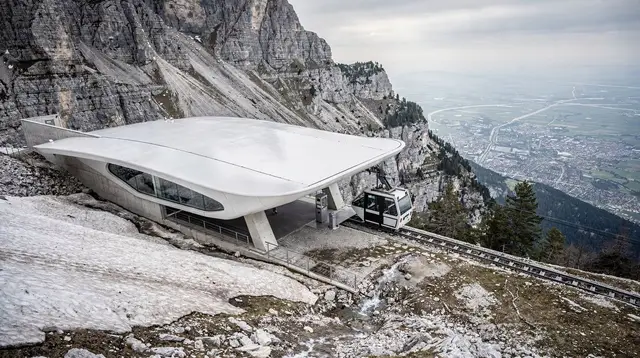
GetYourGuide does not provide a product photo for this activity — the image shows the meeting point, photographed by us.