A 2-3 Day Zillertal and Achensee Itinerary from Innsbruck
How do you combine the Zillertal and the Achensee in one trip from Innsbruck?
Base in Mayrhofen or Innsbruck and spend day one at the Schlegeis dam, day two riding the Achenseebahn cog railway to Tyrol's largest lake, and an optional third day on the way back through Rattenberg, the Schwaz silver mine and Tratzberg castle near Jenbach. All of it is reachable by train and regional bus without a rental car.
Linking Mayrhofen, the Schlegeis Dam and the Achensee into One Trip
The Zillertal and the Achensee sit next to each other on the map east of Innsbruck, but they are two different kinds of place: a long glacier-headed valley running south from Jenbach, and Tyrol’s largest lake sitting in a side valley of its own. Treated separately they are two half-day trips. Linked together over two or three days, they make one of the more satisfying loops out of Innsbruck, mixing a genuinely dramatic dam wall, a working steam railway, and — if there is a third day to spare — a medieval old town, a silver mine and a Renaissance castle on the way back.
This page sets out how the pieces fit together and in what order. Each stop has its own dedicated guide for the details of tickets, timing and what to expect once there; this is the itinerary, not the play-by-play.
Why Base in Mayrhofen Rather Than Innsbruck
Mayrhofen sits at the head of the accessible part of the Zillertal, about an hour from Innsbruck by the Zillertalbahn narrow-gauge railway from Jenbach. For a two or three night stay it is the more sensible base: the Schlegeis reservoir bus leaves from here, several of the valley’s activity operators are based in town, and it cuts out a repeated hour each way that a straight Innsbruck day trip would otherwise cost.
If the plan is a single long day rather than an overnight, Innsbruck as a base still works for the Schlegeis dam and the Achensee taken separately, but trying to stack both into one day from Innsbruck leaves very little time actually at either place. For a longer trip that folds this region into a wider loop of the province, see the tyrol-grand-tour-week itinerary, which sequences the Zillertal and Achensee alongside Innsbruck, the Stubai valley and the Ötztal rather than treating them in isolation.
Day 1: Mayrhofen and the Schlegeis Dam
Arrive by the Zillertalbahn from Jenbach — itself easily reached from Innsbruck’s main station — and settle into Mayrhofen before heading up-valley. The Schlegeis reservoir sits at the very end of the paved road south of Mayrhofen, backed by glaciated peaks, and is reached by a regional bus that runs a toll section up the final stretch of the valley in the warmer months. The dam wall itself is a short, flat walk with a view down the reservoir that is worth the trip on its own.
Two adrenaline installations sit right on the dam wall for anyone who wants more than the view: a flying fox strung across the gorge and a giant swing over the dam face. Both run limited daily slots and are worth booking before arriving rather than hoping for a walk-up spot in July or August.
the flying fox across the Schlegeis dam and the giant swing over the dam wall are the two options actually installed at Schlegeis, and both need a bus or car up from Mayrhofen to reach.
Back in Mayrhofen for the evening, paragliding is the valley’s other signature activity, launched from the surrounding slopes with views back down toward the reservoir direction. a tandem paragliding flight above Mayrhofen is one of several operators running this out of town, and it is as much a Zillertal fixture as the dam itself.
A Note on Hintertux: the Region’s Only Year-Round Glacier
At the head of the Zillertal, roughly 90 minutes beyond Mayrhofen, sits Hintertux — the only glacier ski area in the wider Innsbruck region open every day of the year. It is not part of this two-to-three day loop, which runs toward the Achensee rather than further up the valley, but it is worth knowing about if skiing is part of the plan: the Stubai Glacier, south-west of Innsbruck in a completely separate valley, has a long season but does close for a stretch each year, while Hintertux does not. Do not confuse the two — they are in different valleys, reached by different roads, and the confusion is common enough to be worth naming outright.
Day 2: The Achenseebahn and Tyrol’s Largest Lake
From Mayrhofen, the Zillertalbahn runs back down to Jenbach, where the Achenseebahn — a steam-hauled cog railway dating to the 1880s — climbs from the valley floor up to Seespitze at the southern end of the Achensee. The ride itself, slow and open-sided in season, is as much the point as the lake at the top.
The Achensee is Tyrol’s largest lake by surface area, ringed by mountains and used for swimming, sailing and lakeside walking in summer. A lake steamer connects the villages along its shore, which makes a car unnecessary for a day spent moving between them. Anyone extending this day into an overnight around the lake rather than pushing on can treat it as a standalone stop; anyone continuing the loop should plan to be back down at Jenbach by the evening.
Before or after the Achensee, Kramsach and its open-air farmstead museum sit just off the same stretch of valley and make an easy detour if there is a spare hour. The museum grounds also host an outdoor escape game among the historic buildings, a change of pace from the day’s outdoor activities: an outdoor escape game at the Museum of Tyrolean Farmsteads in Kramsach.
Day 3 (Optional): Rattenberg, the Schwaz Silver Mine and Tratzberg Castle
With a third day available, the return leg toward Innsbruck runs through three stops that reward a slower pace back rather than a straight ride home.
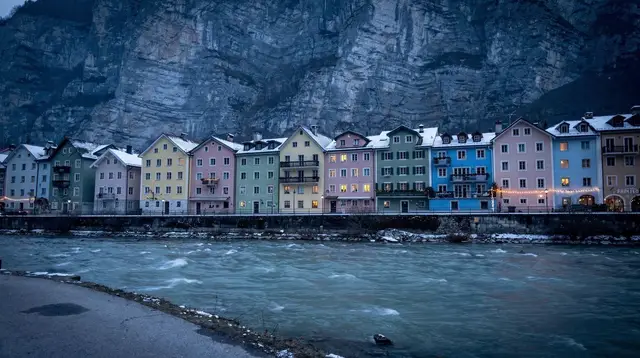
Rattenberg is Austria’s smallest town by population, a compact riverside old town below wooded cliffs, known for its glassmaking workshops and easy to see on foot in an hour or two. From there, Schwaz held one of Europe’s largest silver mines in the sixteenth century, and its underground mine tour — riding a small train into the mountain — is the region’s best inside-the-mountain experience outside the high-alpine cable cars.
Just outside Jenbach, Tratzberg castle is one of Tyrol’s best-preserved Renaissance castles, with painted halls and a Habsburg family tree fresco running the length of one room; it sits close enough to the Schwaz mine and Rattenberg to fold into the same afternoon.
For anyone extending this day further into a canyoning stop before heading back, the Zillertal’s Blue Lagoon canyoning route runs closer to Fügen and Kaltenbach, on the way back down the valley: a canyoning route through the Zillertal’s Blue Lagoon near Fügen is the closer alternative to the Ötztal’s better-known canyons if the itinerary is already headed this direction.
Getting There and Around Without a Rental Car
| Leg | Mode | Approximate time |
|---|---|---|
| Innsbruck to Jenbach | Regional or main-line train | 20-25 minutes |
| Jenbach to Mayrhofen | Zillertalbahn narrow-gauge railway | About 1 hour |
| Mayrhofen to Schlegeis reservoir | Regional bus (toll road) | 30-40 minutes |
| Jenbach to Achensee (Seespitze) | Achenseebahn cog railway | About 50 minutes |
| Jenbach to Rattenberg / Schwaz | Main-line train | 10-20 minutes |
The whole loop runs on rail and regional bus without needing a car at any point, which makes it one of the more straightforward multi-day trips out of Innsbruck for travellers relying on public transport. Anyone driving instead should remember the same rules that apply across Tyrol: a motorway vignette is required, and winter tyres are mandatory in wintry conditions between 1 November and 15 April.
Zillertal vs Stubai: Don’t Mix Up the Two Valleys
It is worth repeating this clearly, because the two names are easy to confuse when planning: the Zillertal runs south-east from Jenbach toward Mayrhofen and Hintertux, while the Stubai valley runs south-west from Innsbruck toward its own glacier. They share a similar shape on the map and a similar role — long alpine valley, glacier at the head — but they are reached by different roads, sit on opposite sides of Innsbruck, and are not interchangeable stops. This itinerary covers the Zillertal and the Achensee only; the Stubai Glacier’s own access and the Top of Tyrol platform are covered separately.
Where to Base Yourself
Two or three nights in Mayrhofen suits anyone prioritising the Zillertal half of the loop and treating the Achensee and the return-leg stops as day trips out. Splitting the stay — one night near the Achensee, the rest in Mayrhofen — suits a slower pace and works well if lake swimming or a steamer trip is part of the plan. Basing entirely in Innsbruck and day-tripping out works only if the trip is compressed into two single-day pushes rather than a connected loop, since the travel time back to Innsbruck each evening eats into time at either destination.
What to Book in Advance
The Schlegeis dam’s flying fox and giant swing run limited slots and fill up on clear summer days; book these ahead rather than on arrival. Paragliding is weather-dependent everywhere in the valley, so operators typically confirm flights the same day or the day before based on conditions — book a window rather than a fixed slot where possible. The Achenseebahn and the Schwaz silver mine both run scheduled departures rather than open access, so checking the day’s timetable before setting out from Jenbach avoids a wasted trip to the station.
FAQ: Planning a Zillertal and Achensee Multi-Day Trip
Is two days enough for the Zillertal and Achensee, or do I need three?
Two full days cover the highlights: Mayrhofen and the Schlegeis dam on day one, the Achenseebahn and the lake on day two. A third day adds Rattenberg, the Schwaz silver mine and Tratzberg castle on the way back toward Innsbruck, which turns the trip from a highlights run into a fuller regional loop.
Can I do this itinerary without a car?
Yes. The Zillertalbahn narrow-gauge railway runs from Jenbach to Mayrhofen, regional buses reach the Schlegeis reservoir and the Achenseebahn’s lower station, and Rattenberg, Schwaz and Jenbach all sit on the main Innsbruck-Munich rail line. A car only saves time, it does not unlock anything otherwise inaccessible.
Is the Achensee the same as the Achenseebahn?
No. The Achensee is Tyrol’s largest lake. The Achenseebahn is the historic steam-hauled cog railway that climbs from Jenbach up to the lake’s southern end at Seespitze, and riding it is one specific way to arrive at the water, not the destination itself.
Is Hintertux in the Zillertal the same as the Stubai Glacier?
No, and this is the itinerary’s most common mix-up. Hintertux is at the head of the Zillertal, roughly 90 minutes from Mayrhofen, and is the only glacier ski area in the region open year-round. The Stubai Glacier is a separate valley south-west of Innsbruck with its own access road and its own long but seasonal ski calendar.
Should I stay in Mayrhofen or day-trip from Innsbruck?
Mayrhofen as a base cuts travel time for the Schlegeis dam and any Zillertal activities, and suits a two to three night stay. Day-tripping from Innsbruck works for a single push to Mayrhofen and the Achensee if time is tight, but stacking both regions into one long day from Innsbruck is a rushed way to see either of them properly.
Do I need to book the Schlegeis dam activities in advance?
The dam wall itself is free to walk and view, but the flying fox and giant swing installed on it run limited daily slots in the warmer months and are worth booking ahead, especially in July and August when Zillertal day-trippers from Innsbruck and the Zell am Ziller area overlap.
Can this itinerary be combined with the rest of Tyrol in one longer trip?
Yes. The Zillertal and Achensee sit on the Innsbruck-Munich rail corridor, which makes them a natural extension of a longer Tyrol loop rather than a standalone detour — see the tyrol-grand-tour-week itinerary for how it fits alongside Innsbruck, the Stubai valley and the Ötztal.
What is the single best stop to cut if I only have one day?
Cut the third day’s castle-and-mine loop before cutting either the Schlegeis dam or the Achenseebahn — those two are the region’s signature sights, while Rattenberg, Schwaz and Tratzberg are a worthwhile but optional add-on best kept for a second visit or a longer stay.
Multi-day tours on GetYourGuide
Verified deep-linked GetYourGuide tours. Book through these links and we earn a small commission at no cost to you.
GetYourGuide does not provide a product photo for this activity — the image shows the meeting point, photographed by us.